


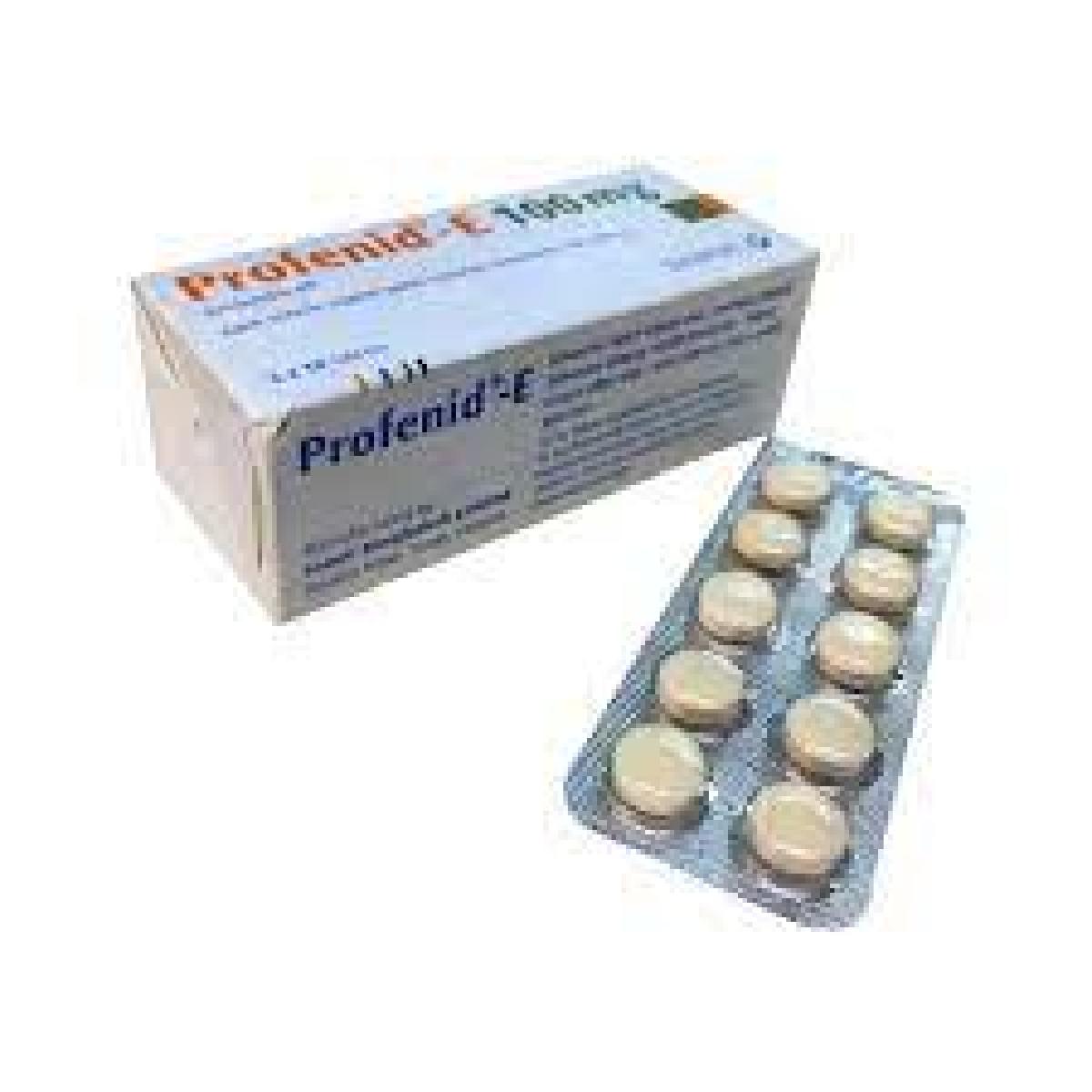
Fever & Pain
Profenid-E Tablet 100mg
Out of Stock
Call for price
<h2> </h2><p>10 tablets</p><p>Indications</p><p>The indications of ketoprofen are based on its anti-inflammatory, analgesic and antipyretic properties. Ketoprofen is indicated for symptomatic treatment of:</p><p>Rheumatoid arthritis</p><p>Degenerative joint diseases</p><p>Musculoskeletal and joint disorders such as tendinitis, sprain</p><p>Pain, regardless of the origin, such as dental pain, headache and primary dysmenorrhea.</p><p>Pharmacology</p><p>Ketoprofen is a non-steroidal anti-inflammatory drug (NSAID) with analgesic and antipyretic actions. In addition to the inhibition of prostaglandin synthesis, it stabilizes lysosomal membranes in vitro and in vivo, inhibits leukotriene synthesis in vitro at high concentrations, and also exhibits antibradykinin activity in vivo. Ketoprofen produces analgesia by inhibiting the synthesis of prostaglandins peripherally and centrally. It has also been suggested that Ketoprofen causes the suppression of prostaglandin synthesis in the CNS (probably in the hypothalamus) leading to its antipyretic effect.</p>
10 tablets
Indications
The indications of ketoprofen are based on its anti-inflammatory, analgesic and antipyretic properties. Ketoprofen is indicated for symptomatic treatment of:
Rheumatoid arthritis
Degenerative joint diseases
Musculoskeletal and joint disorders such as tendinitis, sprain
Pain, regardless of the origin, such as dental pain, headache and primary dysmenorrhea.
Pharmacology
Ketoprofen is a non-steroidal anti-inflammatory drug (NSAID) with analgesic and antipyretic actions. In addition to the inhibition of prostaglandin synthesis, it stabilizes lysosomal membranes in vitro and in vivo, inhibits leukotriene synthesis in vitro at high concentrations, and also exhibits antibradykinin activity in vivo. Ketoprofen produces analgesia by inhibiting the synthesis of prostaglandins peripherally and centrally. It has also been suggested that Ketoprofen causes the suppression of prostaglandin synthesis in the CNS (probably in the hypothalamus) leading to its antipyretic effect.
No additional specifications available.
No vendor information available.
Related Products


Call for price
Call for price
Call for price
Call for price
Call for price
Call for price
Call for price
Call for price
Call for price
Call for price